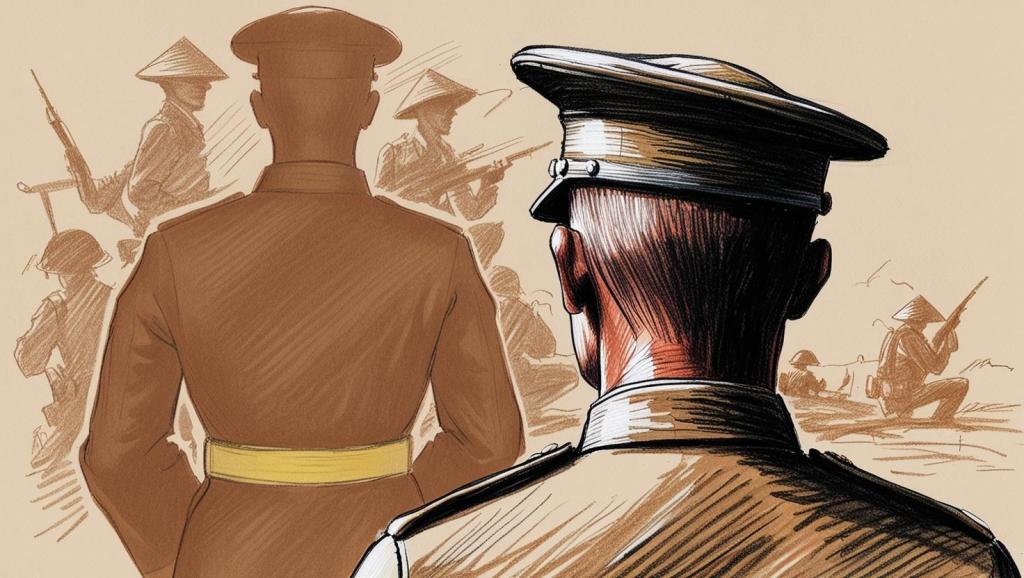
In the annals of espionage during the Vietnam War, the name Pham Xuan An rose to prominence following the New Yorker’s 2005 revelation, “The Spy Who Loved Us,” casting him as a figure both infamous and heroic. Yet, the tapestry of clandestine operations held threads woven with the deeds of others, figures who remained cloaked in shadow, their contributions largely unseen by the world’s gaze.
Among these unsung agents was one who moved like a phantom within the very heart of the American war machine, embedded within the U.S. Army’s Tropic Lightning Division. This operative, a vital artery of the Liberation Army of South Vietnam, maintained an impenetrable veil until the climactic hour – the day that would ultimately be etched into history as Vietnam’s Reunification Day.
He received this reputation, a whispered thing, that he was a traitor: “the Major who surrendered his troops to the Communist.” Yet, the surface of this label concealed a deeper truth, a sacrifice that would later see him honored as a War Hero of the nation.
For on that pivotal day of surrender, amidst the chaos and confusion of conflict’s end, this very lieutenant orchestrated not defeat, but salvation, quietly delivering three hundred bewildered souls from the precipice of further strife. The world knew of one celebrated spy, but the whispers of another, the Major of perceived betrayal, held a tale of quiet heroism, a testament to the intricate and often paradoxical nature of war and its hidden actors.
In the book “Magnificent Camouflage: Stories of Secret Agents in the Saigon Administration”, Agent 110, as Ha Binh Nhuong recounts, was more than an operative; he was “The Flag of Uprising,” a symbol of resistance etched in hushed tones.
 Agent110: The Flag of Uprising